What Are Easter Seamless Patterns? Understanding Seasonal Design From the Ground Up
Every spring, as daffodils push through the soil and pastel colors return to storefront displays, a particular kind of digital and textile design takes center stage. These are Easter seamless patterns—repeating decorative arrangements that feature seasonal motifs without visible borders or interruptions. Whether you have noticed them on a festive tablecloth, a set of social media graphics, or gift wrap at your local boutique, these patterns play a much larger role in visual culture than most people realize. Understanding what they are, how they work, and why they matter can deepen your appreciation for the design decisions that shape seasonal experiences in homes, businesses, and online spaces.
This article explores Easter seamless patterns thoroughly. We will examine their defining characteristics, the traditions that inform their imagery, their practical applications across industries, and the creative processes that bring them to life. By the end, you will have a clear, contextual understanding of a design format that blends artistry, technology, and seasonal tradition.
Understanding Seamless Patterns: The Core Concept
Before focusing specifically on Easter, it helps to understand what a seamless pattern is in the first place. A seamless pattern—also called a repeating pattern or a tileable design—is a rectangular block of artwork engineered so that when multiple copies of that block are placed side by side horizontally and vertically, the edges align perfectly. The result is a continuous, uninterrupted surface of design with no visible seams, cuts, or awkward breaks.
Think of it like a single puzzle piece that, remarkably, fits perfectly against identical copies of itself on all four sides. This principle applies whether the pattern covers a few inches of gift wrap or spans an entire bolt of fabric. The technical precision required to achieve this effect is substantial, but the visual reward is a smooth, professional finish that feels both intentional and effortless.
Seamless patterns are used in textile production, wallpaper design, web backgrounds, packaging, scrapbooking paper, and countless other applications. The seamless quality ensures that whatever the scale, the design never looks chopped off or misaligned.
What Makes an Easter Pattern Distinctly "Easter"?
An Easter seamless pattern draws its identity from a rich vocabulary of seasonal imagery. The motifs are not arbitrary; they carry cultural, religious, and natural associations that have accumulated over centuries. Understanding these elements helps explain why certain designs feel unmistakably like Easter, even at a glance.
The most common visual ingredients include:
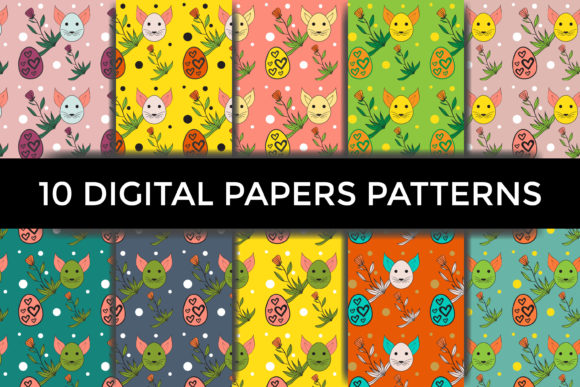
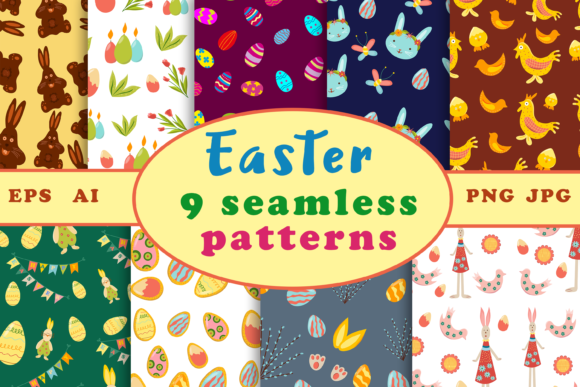
- Easter eggs – Decorated eggs, whether rendered realistically or stylized, are perhaps the most universal Easter motif. They symbolize new life and rebirth.
- Rabbits and bunnies – The Easter Bunny, a figure rooted in German folklore, appears frequently in both realistic and whimsical forms.
- Spring flowers – Daffodils, tulips, crocuses, and cherry blossoms signal the arrival of spring and often dominate Easter patterns.
- Chicks and lambs – Baby animals reinforce themes of new beginnings and the gentleness of the season.
- Crosses and religious symbols – For many, Easter carries deep Christian significance, and patterns may incorporate crosses, lilies, or representations of the empty tomb.
- Pastel color palettes – Soft pinks, baby blues, mint greens, pale yellows, and lavender tones define the traditional Easter color spectrum.
- Carrots and garden elements – Often paired with rabbits, these add a playful, earthy dimension.
A well-designed Easter seamless pattern combines several of these elements into a cohesive, repeating composition. The balance between density and breathing room, the choice between hand-drawn and vector styles, and the specific color harmonies all influence the final mood.
The Cultural and Historical Roots of Easter Imagery
To fully grasp Easter seamless patterns, it is worth understanding where the imagery originates. Easter itself is a holiday with layered traditions. Its name likely derives from Eostre, a pre-Christian Anglo-Saxon goddess associated with spring and fertility. The rabbit, too, has ancient connections to fertility symbolism. Eggs, decorated and exchanged, appear in the records of early Mesopotamian and Egyptian spring festivals.
When Christianity spread through Europe, many of these springtime customs were woven into the celebration of Christ's resurrection. The egg, already a symbol of the sealed tomb from which new life emerges, took on additional theological meaning. Over time, the secular and sacred strands of Easter imagery became deeply intertwined. Today's seamless patterns often reflect this dual heritage, sometimes emphasizing the religious dimension and other times leaning into the cheerful, commercial aspects of the holiday.
In the nineteenth and twentieth centuries, the rise of mass-produced greeting cards, wrapping paper, and home textiles cemented the visual vocabulary we now associate with Easter. Designers began creating patterns specifically for the season, and the seamless format became increasingly important as manufacturing scaled up.
Types of Easter Seamless Patterns
Not all Easter seamless patterns look the same. Designers approach the subject matter with different stylistic intentions, and understanding the main categories can help you choose or appreciate patterns more effectively.
Traditional and Classic Patterns
These patterns lean heavily on heritage motifs. You will see ornate Easter eggs with folk-art decorations, delicate botanical illustrations, and religious iconography rendered with a timeless quality. The color palette tends toward muted pastels and gentle gold accents. Think of the patterns you might find on a grandmother's heirloom table linen or a box of high-quality European chocolates.
Modern and Minimalist Patterns
Contemporary designers often strip Easter motifs down to their essentials. A minimalist pattern might feature simple line-drawn bunnies spaced across a clean white background, or geometric egg shapes in a restrained palette of two or three colors. These patterns appeal to audiences who appreciate subtlety and modern aesthetics. They work beautifully in branding contexts where overt seasonal cheer would feel out of character.
Playful and Child-Oriented Patterns
Bright colors, cartoonish characters, and energetic compositions define this category. Bunnies might wear bow ties, eggs might sport smiley faces, and the overall effect is one of joyful exuberance. These patterns commonly appear on children's clothing, party supplies, and classroom decorations.
Watercolor and Hand-Painted Styles
In recent years, the popularity of watercolor textures in digital design has surged. Easter seamless patterns in this style feature soft washes of color, gentle blending, and an organic, artisanal feel. Brush strokes and subtle imperfections give the repeating tile a human touch, even when used across large surfaces.
Vintage and Retro-Inspired Patterns
Some designers intentionally evoke the aesthetics of mid-century greeting cards, 1970s kitchen textiles, or Victorian-era illustrations. These patterns carry a sense of nostalgia that resonates strongly with audiences seeking comfort and tradition.
Practical Applications Across Industries
Easter seamless patterns are far more than digital curiosities. They fuel a significant portion of seasonal product design across multiple sectors. Understanding where these patterns show up reveals their economic and cultural relevance.
Textiles and Fashion
The clothing industry relies heavily on seasonal patterns. Dresses, shirts, scarves, and children's apparel featuring Easter-themed seamless repeats appear in stores each spring. The seamless nature of the pattern ensures that garments can be cut from large fabric rolls without disrupting the design at seams and edges. Home textiles such as tablecloths, napkins, kitchen towels, and throw pillows also frequently utilize these designs to help households decorate for Easter gatherings.
Paper Goods and Stationery
From gift wrap and greeting cards to scrapbook paper and party invitations, Easter seamless patterns are a staple of the paper goods industry. Manufacturers depend on patterns that can cover large sheets without misalignment. For independent artists selling printable designs online, seamless patterns are among the most popular digital products, allowing customers to print and use the designs in their own projects.
Digital Media and Marketing
Brands seeking to acknowledge the Easter season without a full rebrand often incorporate seamless patterns into their digital presence. Website backgrounds, social media post templates, email newsletter headers, and digital advertisements all benefit from patterns that reinforce a seasonal message. Because seamless patterns are lightweight as digital assets and infinitely tileable, they offer designers flexibility without compromising loading speeds.
Home Decor and Crafts
DIY enthusiasts and crafters use Easter seamless patterns in a multitude of ways. Wallpaper, both traditional and peel-and-stick, often features such patterns. Decoupage projects, painted furniture accents, and custom fabric printing for handmade goods all depend on high-quality seamless designs. The maker community, in particular, has driven demand for unique, artist-created patterns that cannot be found in mass-market stores.
Packaging Design
Seasonal product packaging—think chocolate boxes, cookie tins, and limited-edition consumer goods—frequently employs Easter seamless patterns. The continuous design allows for cost-effective printing across various package sizes and shapes while maintaining a cohesive brand appearance.
How Designers Create Easter Seamless Patterns
The process of creating a seamless pattern is both an art and a technical discipline. Designers typically begin with sketches or digital illustrations of individual motifs. These elements are then arranged within a square canvas, with careful attention paid to the edges. Any element that touches the left edge must align perfectly with a corresponding element on the right edge; the same applies to the top and bottom boundaries.
Most professional designers use software such as Adobe Illustrator, Procreate, or Affinity Designer to build their patterns. Many of these programs include specialized pattern-making tools that preview how the tile will repeat across a larger surface. The designer can then adjust spacing, scale, and overlap until the repeat feels natural and balanced.
A common challenge is avoiding obvious repetition. When the same cluster of eggs or the same bunny appears at regular intervals, the eye picks up on the grid, and the illusion of seamlessness breaks. Skilled designers distribute elements in ways that disguise the underlying tile structure, creating what feels like an organic, sprawling composition.
Color selection is equally critical. Easter patterns traditionally use soft, harmonious palettes, but there is room for variation. A designer might choose a monochromatic scheme for an elegant, restrained pattern or employ bright, saturated hues for a modern, playful effect. Testing the pattern at different scales and on different mockups—fabric swatches, wallpaper previews, phone backgrounds—helps ensure the design works in its intended contexts.
The Business Value of Seasonal Patterns
For independent artists and large design studios alike, Easter seamless patterns represent a meaningful revenue opportunity. Marketplaces such as Creative Market, Etsy, Shutterstock, and Adobe Stock see spikes in demand for seasonal designs each year. A single well-crafted pattern can be licensed for fabric production, sold as a digital download, or bundled into a larger seasonal design kit.
Businesses that plan ahead often source Easter patterns months in advance, allowing time for product development, manufacturing, and marketing. This forward-looking cycle means that by the time consumers are shopping for Easter decorations in March, the patterns they see were likely created the previous autumn or winter.
From a branding perspective, seasonal patterns allow companies to participate in cultural moments without fundamentally altering their visual identity. A software company, for instance, might use a subtle Easter-themed background on its login page for a week, signaling awareness and warmth without compromising professionalism.
Common Misunderstandings About Seamless Patterns
Several assumptions about seamless patterns deserve clarification. The first is that any repeating design is automatically seamless. In reality, poorly constructed repeats produce visible lines, awkward gaps, or abrupt motif cutoffs. A genuine seamless pattern requires precise edge alignment.
Another misconception is that seamless patterns are only relevant for textiles or wallpaper. As outlined above, their applications span digital and physical products across many industries. Even in purely digital contexts, such as video game textures or virtual backgrounds, seamless patterns are essential.
Some people also assume that Easter seamless patterns are inherently childish or unserious. While many designs do target children or festive casual settings, the category includes sophisticated, subtle, and even luxurious interpretations. A watercolor pattern of pale lilies on a cream background can feel elegant and refined, suitable for high-end stationery or interior design.
Choosing the Right Easter Seamless Pattern for Your Project
Whether you are a business owner, a designer, or simply someone planning a family celebration, selecting the right pattern involves a few practical considerations. Think about the scale of the repeat. A large-scale pattern with oversized motifs works well on items viewed from a distance, like tablecloths or wall art. A smaller, denser repeat suits items examined up close, such as cards or phone cases.
Consider the color palette in relation to existing decor or branding. A pattern that looks beautiful in isolation may clash with surrounding elements if not chosen carefully. Also, think about the emotional tone you want to convey. A playful, bunny-filled pattern communicates something very different from a quiet, botanical design with a single cross motif.
Finally, pay attention to the quality of the seamless repeat. If you are purchasing a digital pattern, examine preview images closely. Look for any signs of misalignment at the edges or awkward clustering that might reveal the underlying tile grid. The best seamless patterns stand up to scrutiny at any scale.
The Broader Significance of Seasonal Design
Stepping back, Easter seamless patterns belong to a larger tradition of seasonal and cyclical design that helps humans mark time and celebrate shared experiences. In a world that can feel increasingly fragmented, seasonal visual cues provide a sense of continuity and belonging. They connect personal celebrations to broader cultural narratives and give tangible form to abstract ideas like renewal, hope, and joy.
For designers, creating these patterns is an act of participation in that cultural rhythm. For consumers and businesses, using them is a way of saying, "We are part of this season, too." Understanding the craftsmanship, history, and intention behind these designs transforms them from simple decorations into meaningful artifacts.
As digital tools continue to evolve and new generations of artists bring fresh perspectives to old motifs, the world of Easter seamless patterns will keep expanding. The eggs, bunnies, flowers, and crosses will remain, but the ways they are arranged, colored, and shared will change. And that continuity within change is, fittingly, exactly what the season itself represents.