The Art of Seamless Patterns: From Sprinkles to Digital Design
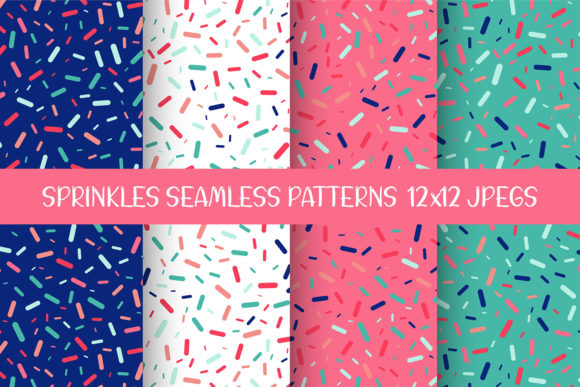
Imagine a cupcake decorated with colorful sprinkles. They are scattered evenly, creating a joyful, repetitive pattern across the surface. If you could take that idea of sprinkles and repeat it infinitely—without gaps, overlaps, or awkward edges—you would have a seamless pattern. This concept, moving from the whimsical world of baking to the precise realm of design, is a fundamental principle in visual creation. A seamless pattern, often called a tiling pattern, is a single graphic motif that can be repeated horizontally and vertically to fill any area, creating a continuous, unbroken design.
What Makes a Pattern "Seamless"?
The core magic of a seamless pattern lies in its edges. Unlike a standard image with a clear border, a seamless pattern’s edges are designed to match perfectly with the opposite edges. When you place copies of the pattern tile side-by-side and top-to-bottom, the elements flow together without any visible seams or disruptions. It's like laying tiles on a floor: each individual tile has a design that connects flawlessly with the next one.
The Technical Foundation: The Pattern Tile
At the heart of every seamless pattern is the pattern tile. This is the small, square (or sometimes rectangular) unit that contains the complete design information. Creating this tile requires careful planning. Designers must ensure that any element touching the right edge logically continues from the left edge, and any element touching the top edge continues from the bottom edge. This can be achieved through mirroring, strategic placement, or designing elements that naturally "bleed" off the edge to reappear on the opposite side.
A common misunderstanding is that seamless patterns are simple or boring due to their repetition. In reality, the repetition itself can create complex and dynamic visual effects. The challenge and artistry come from designing a small tile that, when repeated, produces a large, engaging, and coherent whole—much like how a single, well-placed sprinkle contributes to the overall festive look of the cupcake.
The Significance and Purpose of Seamless Patterns
Seamless patterns are not merely a technical exercise; they serve a profound practical purpose. Their primary value is infinite scalability. Because the pattern can repeat without limitation, it can cover any surface area, from a smartphone screen to a massive billboard, without losing quality or requiring a gigantic source image file. This makes them incredibly efficient for digital and physical applications.
Their significance stretches across history, from ancient mosaic floors and textile weaves to modern digital interfaces. In every case, the seamless pattern provides structure, rhythm, and aesthetic cohesion. It turns a singular motif into an environment.
From Traditional Craft to Digital Dominance
Before computers, creating seamless patterns was a meticulous craft. Textile designers plotted repeats on paper, and ceramicists calculated tile layouts. Today, software like Adobe Photoshop, Illustrator, and specialized pattern-making tools have democratized the process. However, the fundamental principles remain unchanged. The digital age has exponentially increased the use and importance of seamless patterns, embedding them into the fabric of our daily digital lives.
Seamless Patterns in Modern Life and Work
You interact with seamless patterns constantly, often without realizing it. Their practical relevance is vast and touches nearly every domain.
- Digital Design & Web Development: Website backgrounds, app interfaces, and loading screens frequently use subtle seamless patterns to add texture without overwhelming content. A delicate dot pattern or a geometric grid can provide visual interest and depth.
- Textile and Fashion Industry: From the florals on your dress to the stripes on your upholstery, most fabrics are produced using seamless pattern rolls. The pattern tile is repeated across miles of material.
- Product Design and Packaging: Wrapping paper, gift bags, and product packaging often feature seamless patterns to create a branded, attractive surface.
- Game Development and Virtual Environments: In video games, seamless textures are crucial for creating realistic worlds. A single, seamless brick or grass texture can be tiled to build entire walls or fields, saving memory and processing power.
- Education and Creativity: Understanding seamless patterns is a key lesson in graphic design and art courses. It teaches students about composition, rhythm, and spatial reasoning. For hobbyists, creating patterns for scrapbooking, DIY projects, or digital scrapbooking is a popular creative outlet.
Aiding Communication and Brand Identity
In business, seamless patterns become part of brand identity. A unique pattern can be used across marketing materials, office interiors, and products to create a strong, recognizable visual language. Think of the distinctive patterns used by certain brands on their store walls or shopping bags—they convey style and consistency without needing a large logo everywhere.
Building Your Understanding: Types and Examples
To grasp the variety, let's explore some common types of seamless patterns, illustrated with natural examples.
- All-Over Patterns: Motifs are distributed evenly across the entire tile with no obvious focal point. Example: The classic "polka dot" or a scatter of sprinkles. It creates a uniform, textured feel.
- Geometric Patterns: Based on shapes, lines, and angles. Example: A hexagonal grid (like a honeycomb) or a chevron stripe. These often rely heavily on precise edge matching.
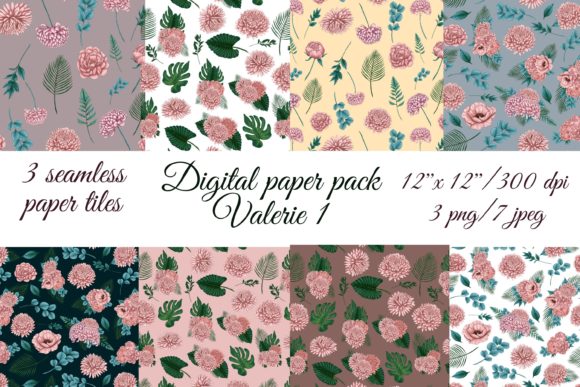
- Organic/Floral Patterns: Features natural elements like leaves, flowers, or vines. Example: A repeating rose pattern where stems and leaves intertwine at the edges to form a continuous garden.
- Border-Based Patterns: The main motif forms a clear border or stripe within the tile, which then repeats to form stripes or bands. Example: A pattern tile containing a single, complex wreath that repeats to form a line of wreaths.
- Digital Abstract Patterns: Often created with digital tools, featuring gradients, blurs, or abstract shapes. Example: A pattern of flowing, connected color clouds used as a modern website backdrop.
A helpful way to visualize any seamless pattern is to think of it as a wallpaper for any surface. The pattern tile is the swatch you buy, and repeating it covers your entire wall (or screen, or fabric) perfectly.
Clarifying Common Misconceptions
Several assumptions can cloud understanding of seamless patterns.
- Misconception 1: They are just for decoration. While decorative, their functional role in resource efficiency (small file size, infinite scale) is critical in technology and manufacturing.
- Misconception 2: Creating them requires advanced software. While software helps, the principle can be practiced with pencil, paper, and a ruler by drawing a square and designing a motif that connects on all sides.
- Misconception 3: All repeating patterns are seamless. Not true. Many patterns have a noticeable "repeat gap" or a obvious blocky edge when tiled. True seamless patterns are engineered to hide that repeat completely.
- Misconception 4: They lack originality due to repetition. The creativity lies in the design of the tile itself. A cleverly designed tile can generate an endlessly fascinating and original large-scale composition.
The Broader Context: Patterns as a Universal Language
Understanding seamless patterns opens a door to a broader appreciation of pattern-making as a universal human language. From the atomic structures in crystals to the spirals in galaxies, nature operates with seamless, repeating patterns. In human culture, patterns convey meaning, tradition, and identity—think of the patterns in traditional kilims or the paisley motif.
In our current technological era, the logic of the seamless pattern is fundamental to how computers manage graphics and textures efficiently. It represents a beautiful intersection of art, mathematics, and practical engineering. Learning about them enhances not only your design skills but also your ability to see the underlying, repetitive structures that organize our visual world.
Getting Started and Applying the Knowledge
For the beginner, start by observing. Look at your clothing, your wallpaper, a website background. Try to mentally isolate the "tile." For the experienced reader, consider how mastering seamless patterns can optimize your workflow. Use pattern libraries for design projects, create custom textures for 3D modeling, or develop a unique pattern set for your brand.
Whether your interest begins with the simple charm of sprinkles on a confection or the need for a website background, the journey into seamless patterns reveals a discipline where meticulous planning within a small space yields boundless creative possibility. It is a reminder that sometimes, to create something vast and continuous, you must first perfect a single, seamless square.