Seamless Patterns and Halloween Backgrounds: Understanding the Right Fit for Your Design Project
Whether you are preparing digital invitations, refreshing an online shop, or planning seasonal decorations, the choice between seamless patterns and Halloween backgrounds often comes up. At first glance, they might look like two completely different categories. One is a repeatable tile, the other a themed scene. However, they overlap in many creative workflows, and deciding which to use—or how to combine them—can influence the quality, flexibility, and effectiveness of your final design. This guide offers a practical, research-backed look at what each option brings to the table, how they compare with similar resources, and the tradeoffs you should weigh before downloading or purchasing assets.
What Are Seamless Patterns and How Do They Work?
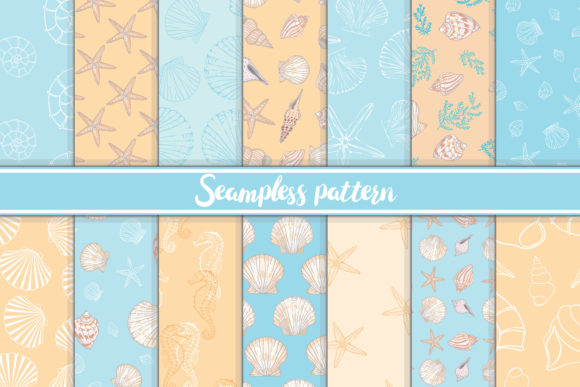
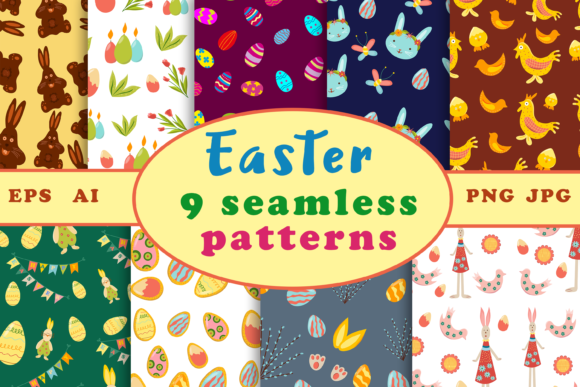
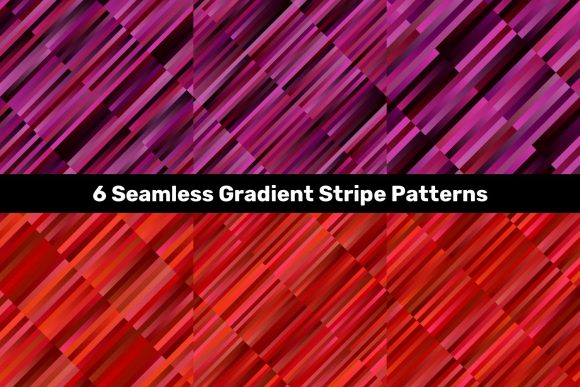
A seamless pattern is a repeating tile that creates a continuous design without visible borders or breaks. When placed side-by-side or tiled on a canvas, the edges blend perfectly. This is achieved through careful alignment, mirroring, or offsetting during the creation process. Designers use seamless patterns for everything from fabric prints and wallpapers to website backgrounds and product packaging. The key advantage is infinite scalability—once you have a high-quality tile, you can fill any space without distortion or obvious repetition artifacts.
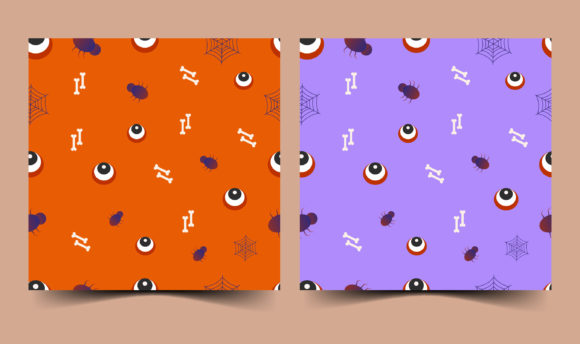
Seamless patterns usually fall into a few main style categories: geometric, floral, abstract, illustrative, and themed. Themed seamless patterns—such as those featuring pumpkins, bats, spiderwebs, or haunted houses—are what often intersect with Halloween backgrounds. A seamless Halloween pattern gives you the flexibility to cover a large surface while maintaining a festive look. For example, a small business selling Halloween-themed wrapping paper would rely on a seamless pattern to print rolls of wrapping material without manual tiling.
What Makes Halloween Backgrounds Distinct?
A Halloween background is typically a single, high-resolution image or graphic designed to set a mood for the holiday. Unlike seamless patterns, these backgrounds are not engineered for repetition. They are composed as a complete scene—perhaps a silhouette of a haunted forest, a night sky with a full moon, or a spooky graveyard. Their purpose is immediate visual impact. You would use a Halloween background for a party flyer, a social media post, a Zoom virtual backdrop, or a greeting card where one image fills the frame.
These backgrounds can be realistic (photographic composites), illustrated (digital paintings or vector art), or abstract (gradients, silhouettes, texture overlays). Many marketplaces offer them individually or in packs, often with a clear focus on mood, color palette, and symbolic imagery. The distinct quality is that they are intended to be seen as a whole, rather than as a repeatable building block.
Comparing Seamless Patterns and Halloween Backgrounds to Similar Asset Types
When browsing stock libraries or design marketplaces, you will encounter plenty of related terms: digital papers, textures, clipart sets, vector illustrations, and themed overlays. It helps to know how seamless patterns and Halloween backgrounds fit into this wider landscape.
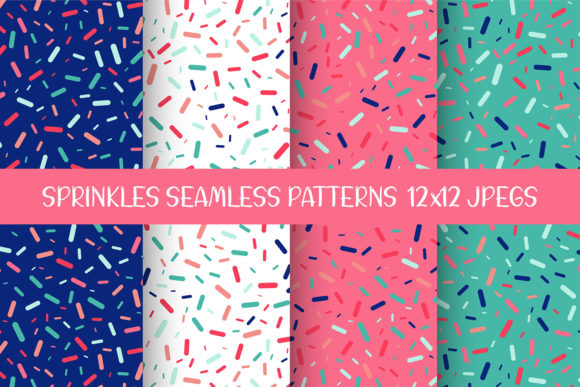
Digital papers are often synonymous with seamless patterns, particularly in the scrapbooking and crafting communities. A digital paper pack usually contains several 12×12 inch JPEG tiles that repeat without seams. They are essentially the same thing. Textures, by contrast, might not be seamless—they can be photographs of concrete, wood, or fabric that add depth to a design but often require blending work if you need to cover a large area.
Clipart sets and vector illustrations offer individual elements (like a pumpkin or a ghost) that you can arrange yourself. This gives you composition freedom but takes more time and skill. Halloween backgrounds, on the other hand, deliver a complete scene right out of the box. They trade flexibility for convenience. Similarly, a non-seamless Halloween pattern—say, a large JPEG with a repeated motif that does not align at the edges—is a quick fix but can look unprofessional when tiled, because the seams will show as visible lines or breaks.
Key Strengths and Tradeoffs of Each Option
Understanding the real-world differences can help you decide faster and avoid rework. Here is a breakdown of what each type does well and where it falls short.
Seamless Patterns: Strengths
- Infinite scalability: Tile a small pattern across any dimensions—from a phone screen to a billboard—with no loss in quality (especially if vector-based).
- Professional finish: No jarring seams or breaks, which is critical for print-on-demand products, fabrics, and wallpapers.
- Resource efficiency: A single small file can work for multiple projects, reducing storage and download times.
- Versatility beyond Halloween: Many seamless patterns can be recolored or used year-round if the theme is subtle, extending their value.
Seamless Patterns: Limitations and Tradeoffs
- Design complexity: Creating a truly seamless design requires skill; not all files marketed as “seamless” are perfectly aligned at the edges, so testing is essential.
- Repetition fatigue: A pattern that repeats too obviously can look cheap. This is more likely with simple motifs or large tile sizes.
- Less immediate focal point: Because patterns are meant to cover surfaces, they rarely provide a ready-made center of interest. You often need additional design elements layered on top.
Halloween Backgrounds: Strengths
- Instant atmosphere: A well-composed Halloween background immediately communicates the holiday mood without requiring additional layout work.
- Visual storytelling: Elements and scenes are arranged to lead the eye, making them great for hero images, banners, or card fronts.
- Wide variety: You can find anything from cute and whimsical to dark and horror-inspired, giving you control over tone.
- Ease of use for non-designers: Anyone can place a background image behind text and achieve a polished result quickly.
Halloween Backgrounds: Limitations and Tradeoffs
- Fixed composition: You cannot easily extend the design to a larger canvas without stretching, cropping, or combining additional assets.
- Seasonal specificity: They are typically useful for a few weeks each year, which may not justify a large investment unless you reuse them annually.
- File size concerns: High-resolution photographic backgrounds can be heavy, impacting website load times or storage.
- Potential for overused assets: Popular backgrounds can appear in many places, reducing originality if you do not customize them.
Decision Factors: When to Choose Seamless Patterns Over Halloween Backgrounds
Your choice should hinge on the project’s functional requirements, not just aesthetics. Ask yourself these questions to narrow down the right approach.
Is the surface area large or covers multiple product types? If you need to print on fabric, create a continuous website background, or design packaging that wraps around a box, a seamless pattern is almost always the better option. A Halloween background, even at high resolution, will either run out of canvas or require awkward stretching.
Do you need a ready-made focal image, or a supportive backdrop? For a party invitation, you might want a Halloween background with a built-in central focus where you can add text. For a desktop wallpaper or a scrapbooking paper, a seamless pattern adds texture without competing with the main elements you add later.
How much customizing do you plan to do? If you are comfortable with design software, you can start with a seamless Halloween pattern and build your own scene by adding clipart elements. This blends the best of both worlds and results in unique outcomes. If you need a fast, one-shot solution, a well-chosen Halloween background saves time.
Is commercial licensing a concern? Both asset types come with various usage rights. Always check whether the file is licensed for print-on-demand, resale, or large-scale commercial use. Some pattern designers offer extended licenses for physical products, while background artists may restrict resale of the image itself. This is not a difference between patterns and backgrounds per se, but a practical consideration when sourcing files.
Practical Scenarios and Examples
Imagine you run a small online store that sells handmade candles. For a Halloween launch, you need product packaging and an email banner. For the packaging wrap, you would look for seamless Halloween patterns—maybe a subtle pattern of black cats and moons that repeats nicely around the box. The email banner, however, calls for a striking Halloween background with a dark, moody scene to grab attention and highlight the candles in the foreground.
Now consider a community center hosting a family-friendly Halloween event. They need a large banner for the entrance and a set of table decorations. The banner could use a seamless pattern as a base, overlaid with large text and a few vector illustrations. The table decorations—like printable placemats or cutouts—might benefit from a Halloween background that serves as a scene, printed once per mat, without the need for tiling.
For digital creators, the use cases are equally diverse. A blog post about Halloween recipes could feature a seamless pattern in the header’s background to add a festive touch that does not distract from the food photography. An event photographer, on the other hand, might sell themed backdrop overlays to clients—these would be Halloween backgrounds that replace green screen areas in portraits.
When to Explore Other Options or Hybrid Approaches
There are times when neither a pure seamless pattern nor a standalone Halloween background is optimal. If you need maximum flexibility, consider building your own library of themed clipart or purchasing a vector asset pack. With individual elements (pumpkins, leaves, ghosts, border designs), you can create both custom backgrounds and seamless patterns using design software. This demands more skill but gives you full control over color schemes, placement, and licensing.
Another alternative is layered templates or scene creators, available through some design platforms. These allow you to mix and match backgrounds, overlays, and patterns in a guided way without needing advanced technical knowledge. They can serve as a middle ground between ready-made and fully custom results.
If the project requires a highly specific look that stock assets cannot match, commissioning a designer to create a tailored seamless pattern or Halloween background might be the best long-term investment, especially for branding purposes. This ensures no one else uses the exact same imagery.
Evaluating Quality and Technical Compatibility
Beyond the artistic style, technical quality often determines how usable a file really is. For seamless patterns, always check if the tile works at 100% scale before committing to a large project. Download a sample or view a full-resolution preview if possible. Look for subtle color shifts or misalignment at the edges. Vector formats (AI, EPS, SVG) offer the most flexibility for scaling and editing. Raster formats (JPEG, PNG) are fine for many uses, but ensure the resolution matches your output—at least 300 DPI for print.
For Halloween backgrounds, resolution and aspect ratio matter more than tiling. Determine the exact dimensions you need before purchasing. A wide horizontal background may not work for a tall poster without cropping out important details. Also, pay attention to the style’s compatibility with your existing brand colors or theme. A background heavy with neon orange and purple might clash with a more muted, vintage aesthetic.
In both cases, consider file size and optimization, especially for web use. Large, uncompressed images can slow down a site, impacting user experience and SEO. Many seamless patterns can be heavily compressed without noticeable quality loss because of their repetitive nature. Halloween backgrounds with many gradients and details may require more careful optimization.
Long-Term Value and Reusability
When building a resource library, think about how often you will actually use the asset. Seamless patterns, particularly those with neutral or seasonal but not overly specific themes, tend to have greater longevity. A subtle pumpkin pattern might be suitable for fall crafts beyond just Halloween. A chaotic background full of jack-o’-lanterns and neon text, however, is strictly limited to one holiday.
Some creators combine both approaches by offering pattern sets that match background collections. This allows you to keep a consistent look across printed and digital materials. If you plan multiple coordinated projects—such as a party suite with invitations, envelopes, labels, and banners—this consistency can strengthen brand recognition or event identity.
Ultimately, the decision between seamless patterns and Halloween backgrounds is not about which one is better overall. It is about aligning the strengths of each with the specific demands of your project. By examining the surface you need to cover, the role the graphic will play, and the amount of creative control you want, you can make a confident choice that saves time and produces professional results. Whether you prioritize the infinite repeatability of a well-crafted pattern or the instant atmosphere of a themed background, understanding these nuances helps you invest wisely in design assets that genuinely serve your vision.