The Silent Power of Geometric Line Patterns
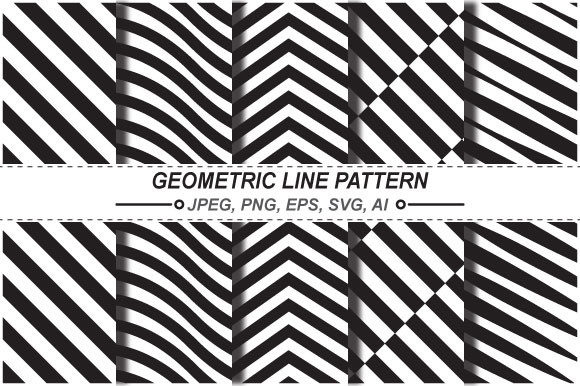
Look around. From the minimalist branding of a tech startup to the subtle tessellations in a website’s background, geometric line patterns are quietly shaping our visual world. More than mere decoration, these structured arrangements of lines, angles, and forms are a foundational language. They communicate order, direction, energy, and connection without a single word. In an era saturated with complex imagery and information, the clarity and rhythm of geometric line patterns offer a powerful antidote, providing structure where there might otherwise be chaos.
From Ancient Foundations to Modern Applications
The use of geometric line patterns is not a new trend but a rediscovery of a timeless principle. Think of the precise tessellations in Islamic art, conveying infinity and unity, or the rigorous grid systems of Renaissance architects, establishing harmony and proportion. Historically, these patterns served symbolic, structural, and spiritual purposes. Today, the core principles remain, but the applications have exploded across digital and physical spaces. This evolution is driven by a need for scalable, systematic design that can adapt to countless contexts—from user interface elements to textile prints to urban planning diagrams.
What has changed is the toolset and the pace. Software allows designers and creators to generate, iterate, and manipulate complex geometric line patterns with precision and speed. This accessibility has transformed them from specialized artistic endeavors into versatile components of modern workflows. A graphic designer might use a repeating linear pattern to create a sense of movement in a logo, while a data analyst might employ a gridded line pattern as the underlying structure for a more readable chart. The pattern bridges disciplines.
Clarity in Complexity: The Contemporary Relevance
Why are geometric line patterns gaining such focused attention now? Our daily environment is visually and cognitively overloaded. Users and consumers crave experiences that are intuitive, clean, and trustworthy. A well-constructed geometric line pattern inherently provides visual hierarchy and guides the eye. In user experience (UX) design, for instance, subtle line patterns can delineate sections on a webpage or create a perceived path for a user to follow, enhancing usability without aggressive ornamentation.
For businesses and brands, these patterns offer a way to establish identity with sophistication and flexibility. A custom geometric line pattern can become a recognizable brand asset, applied across packaging, digital assets, and physical spaces, creating a cohesive and modern impression. It signals thoughtfulness and precision—values that resonate with today’s market. Furthermore, in the realm of digital content, such patterns provide lightweight, non-distracting texture that can make a flat design feel dynamic and engaging, improving aesthetic appeal without sacrificing performance.
Practical Implications for Creators and Professionals
The practical use of geometric line patterns demands both artistic sensibility and systematic thinking. For the creative professional, it begins with intent. What is the pattern meant to communicate? Direction? Stability? Network? The choice of line weight, spacing, angle, and repetition all carry meaning. A pattern of thin, parallel lines might suggest calmness and order, while intersecting, bold lines could imply dynamism and connection.
Consider a freelance web developer building a site for a financial consultancy. Implementing a subtle, grid-based line pattern in the header or footer can subliminally reinforce themes of stability, structure, and accuracy. A lifestyle blogger, wanting to create a more polished visual theme for their platform, might use a simple, elegant linear pattern as a border or divider, elevating their content’s presentation without needing complex imagery. The key is restraint and alignment with the core message.
- Start Simple: Begin with basic grids, stripes, or dot-and-line connections. Complexity can emerge from simple rules.
- Consider Context: A pattern for a mobile app icon needs to be robust and recognizable at tiny sizes, while a pattern for wall art can be more intricate.
- Embrace Tools: Use vector design software (like Adobe Illustrator or free alternatives) that allows for exact alignment, repetition, and scaling. This ensures the pattern remains crisp across applications.
- Test for Function: Always check that the pattern enhances, not obstructs. In UX, does it help guide the user? In print, does it reproduce clearly?
Geometric Line Patterns as a Structural Language
Beyond aesthetics, geometric line patterns function as a structural language for organizing information. In data visualization, the foundational grid lines are a geometric pattern that makes data comprehensible. In architecture and interior design, patterns implied by flooring tiles, lighting layouts, or shelving systems organize space and influence movement. This application speaks to a broader trend: using visual systems to manage complexity. As information becomes more interconnected, we rely on these linear frameworks to map relationships, processes, and flows.
Educators and presenters can leverage this understanding. A complex concept, like a network ecosystem or a historical timeline, can be made more accessible when presented within a clear, patterned diagram—using lines to connect ideas and show progression. The pattern provides the scaffold upon which the detailed content hangs, making it easier to digest. This is a shift from decorative to functional, where geometric line patterns become active participants in communication.
Integration into Modern Lifestyles and Trends
The minimalist and wellness trends in lifestyle have also embraced geometric line patterns. In home décor, patterns featuring clean lines and repetitive forms create calming, ordered environments. They offer visual interest without the emotional weight of figurative art. This aligns with a desire for spaces that feel curated, peaceful, and intentional. Similarly, in personal technology, watch faces, phone wallpapers, and app skins often utilize geometric line patterns for their customizable, sleek, and non-distracting qualities.
For the entrepreneur or marketer, this lifestyle integration is a cue. Products, services, and campaigns that incorporate these patterns visually tap into these cultural preferences. They signal modernity, clarity, and a design-conscious mindset. It’s a subtle way to align a brand with the aesthetic values of a contemporary audience.
Moving Forward with Intentional Design
The future of geometric line patterns lies not in increasingly complex algorithms for generation, but in more thoughtful and human-centered application. The technology to create them is already advanced; the next step is deepening our understanding of their psychological and functional impact. How does a specific pattern affect mood, comprehension, or behavior? Research in fields like environmental psychology and human-computer interaction will provide more grounded insights for practitioners.
For anyone looking to incorporate geometric line patterns into their work or projects, the recommendation is to focus on purpose. Avoid using them simply because they are trendy. Instead, ask: does this pattern solve a problem? Does it organize information? Does it establish a desired tone? Does it improve the experience? By anchoring the use of geometric line patterns in these practical questions, their power is fully realized—not as fleeting decoration, but as enduring, functional design elements.
Ultimately, the resonance of geometric line patterns today is a response to a world in need of visual order. They are a tool for creating clarity, guiding attention, and building cohesive identities across the fragmented spaces of our digital and physical lives. Their silent power is in their ability to structure our view, subtly leading us toward understanding and engagement.