The Art and Science of Abstract Geometric Seamless Patterns
In the world of visual design, there exists a versatile and powerful tool that often operates quietly in the background, shaping our digital and physical environments. These are abstract geometric seamless patterns. While you might not consciously notice them every day, they are ubiquitous, providing texture, rhythm, and cohesion to everything from website backgrounds to fabric designs, packaging, and interior wallpapers. This article will explore what these patterns are, why they are significant, and how they seamlessly integrate into modern life, business, and creativity.
What Exactly Are Abstract Geometric Seamless Patterns?
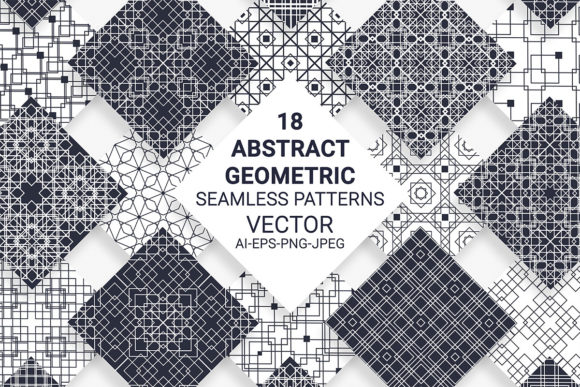
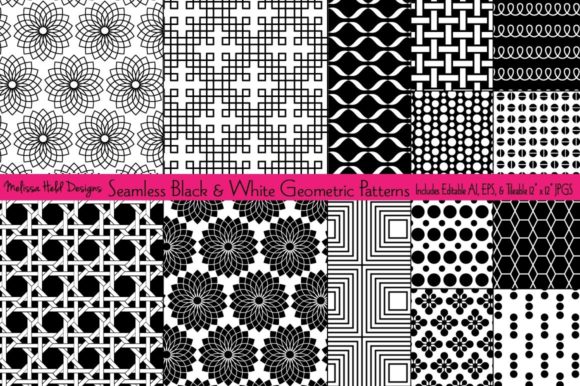
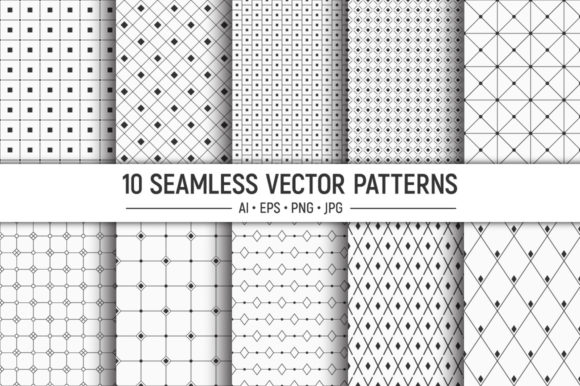
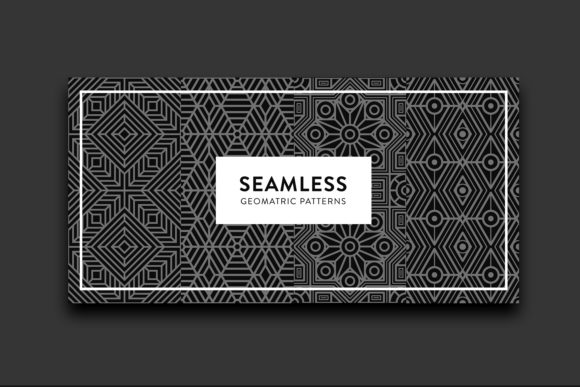
Let’s break down the term to build a foundational understanding. Abstract means the design does not represent a recognizable object from the real world; it is non-representational, focusing on shapes, lines, and forms. Geometric refers to the use of mathematically-inspired elements: circles, squares, triangles, hexagons, lines, and polygons. Seamless is the crucial technical characteristic—it means the pattern can tile infinitely without any visible edges or breaks. When you repeat the pattern tile horizontally and vertically, it creates a continuous, uninterrupted surface.
Imagine a single square tile featuring an intricate arrangement of overlapping triangles and dots. When this tile is duplicated and placed side-by-side and above-and-below, the edges align perfectly. The triangles from one tile appear to continue into the next, creating a larger, unified field of design. This seamless quality is what makes these patterns so practical for covering large or scalable areas, both digital and physical.
The Purpose and Significance: More Than Just Decoration
The primary purpose of these patterns is to provide structured visual texture. However, their significance extends far beyond simple decoration. They serve several key functions:
- Creating Visual Hierarchy and Focus: A subtle geometric pattern on a webpage background can make the foreground content (like text or images) stand out more clearly, guiding the user's attention.
- Establishing Brand Identity: Companies often use custom geometric patterns as part of their brand aesthetics. The patterns can convey attributes like modernity, precision, innovation, or stability.
- Enhancing User Experience: In UI/UX design, seamless patterns can reduce visual monotony on long-scrolling pages or within application interfaces without overwhelming the user.
- Facilitating Production: In textile, wallpaper, and wrapping paper manufacturing, seamless patterns are essential because they allow for continuous printing and application over rolls of material.
Their abstract nature gives them a universal and timeless quality. Unlike patterns depicting specific cultural or seasonal motifs, abstract geometric patterns are often neutral and adaptable, making them suitable for global audiences and diverse applications.
The Practical Relevance in Modern Life and Work
It’s fascinating to see how this niche design element permeates various facets of contemporary life. Their practical relevance is immense.
In Digital Spaces and Technology
The digital world is a primary habitat for seamless patterns. Website and app designers utilize them to create engaging backgrounds that are lightweight (often as small, repeating image files) and don’t distract from functionality. Graphic designers use them in presentations, social media graphics, and digital advertisements to add depth and professionalism. A common example is the use of a minimalist dot-and-line pattern in the background of a fintech app, subtly communicating concepts of networks and connectivity.
In Business and Marketing
Brands leverage these patterns to build a cohesive visual language. From the patterned lining of a luxury brand’s shopping bag to the background of a corporate report, these designs reinforce brand recognition. They are also key in product packaging, where a seamless geometric pattern can wrap around a box perfectly, creating an attractive and consistent look. Misunderstanding: Some assume these patterns are merely "filler" art. In reality, they are often strategically chosen to align with a brand’s color psychology and desired market perception.
In Education and Creativity
In educational materials, clean geometric patterns can make charts, infographics, and textbooks more visually appealing and easier to digest. For creatives—artists, illustrators, crafters—these patterns are a resource and an inspiration. They are used in digital art canvases, as textures in 3D modeling, and as templates for physical crafts like quilting or stenciling. Their repetitive, mathematical nature can also be a tool for teaching concepts of symmetry, tessellation, and rhythm in art and math classes.
In Daily Activities and Interior Design
Look around your home. The wallpaper in a contemporary kitchen, the design on your ceramic tile floor, or the print on your bedding might very well be an abstract geometric seamless pattern. Their use in interior design allows for creating atmospheres: busy, energetic patterns for dynamic spaces; sparse, orderly patterns for calm, minimalist rooms. They bring visual interest to everyday objects without being thematically restrictive.
Building a Broader Understanding: Design Principles and Creation
To appreciate these patterns fully, it helps to understand some of the design principles behind them and how they are made.
Key Design Principles Involved
- Tessellation: This is the geometric principle of fitting shapes together without gaps or overlaps. Many seamless patterns are based on tessellating shapes like hexagons or rhombuses.
- Balance and Rhythm: The pattern must distribute visual elements (color, shape size) evenly to avoid a "heavy" spot that breaks the seamlessness. Rhythm is created through the regular repetition of elements.
- Color and Contrast: Color choices define the pattern’s mood and usability. High-contrast patterns are bold and attention-grabbing; low-contrast patterns are subtle and background-oriented.
- Scale and Density: The scale (size of elements) and density (how many elements per tile) determine the pattern’s impact. A large-scale, low-density pattern feels open; a small-scale, high-density pattern feels intricate and detailed.
How They Are Created: From Analog to Digital
Historically, such patterns were hand-drawn with precise measurements to ensure seamlessness. Today, digital tools like Adobe Photoshop, Illustrator, and specialized pattern-making software have revolutionized the process. Designers create a single tile within a bounded "canvas," carefully ensuring that elements that touch the edge are mirrored or continued in a way that will connect with the adjacent tile. Software often has "pattern preview" modes to test the seamless tiling instantly.
A helpful example: Creating a simple staggered dot pattern. The designer places dots within a square. A dot placed exactly at the top-left corner must also have a matching dot placed at the bottom-right corner of the tile, so that when tiled, the dots align diagonally across the larger surface, creating a seamless grid.
Clarifying Common Misunderstandings
Two common assumptions about abstract geometric seamless patterns deserve clarification:
Misunderstanding 1: They are easy to make because they are repetitive. While the concept is based on repetition, crafting a high-quality seamless pattern requires significant skill. It involves thoughtful design, balanced composition, and precise technical execution to achieve true seamlessness without visual fatigue.
Misunderstanding 2: They are cold and impersonal because they are geometric. Geometry can evoke a wide range of emotions. A pattern with soft, rounded shapes and pastel colors can feel warm and inviting. A pattern with sharp angles and metallic colors can feel dynamic and high-tech. The abstract nature allows for emotional nuance through color, form, and scale choices.
The Future and Evolution
As technology evolves, so do the applications of these patterns. With the rise of virtual and augmented reality, seamless patterns will be used to texture 3D environments endlessly. In responsive web design, patterns need to adapt to screens of all sizes and resolutions, making their scalability even more valuable. Furthermore, algorithmic and generative design—where patterns are created by code—is opening new frontiers for infinite, unique geometric pattern variations.
Ultimately, abstract geometric seamless patterns are a fundamental element in the lexicon of design. They bridge art and mathematics, aesthetics and utility. From the digital interface you interact with daily to the physical products you use, these patterns work quietly in the background, organizing visual space, conveying messages, and enhancing our experience of the world. By understanding their design, purpose, and widespread relevance, we gain a deeper appreciation for the subtle artistry that shapes our visual culture.