The Enduring Allure of Red and Black Seamless Gothic Patterns in Modern Visual Culture
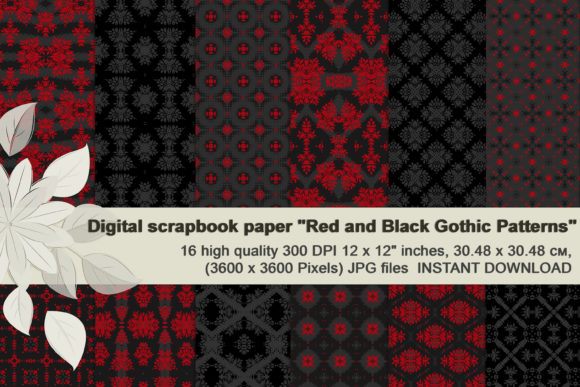
The interplay of crimson and obsidian has captivated human imagination for centuries, and nowhere is this more powerfully expressed than in red and black seamless gothic patterns. These intricate designs, characterized by their repeating motifs and dramatic color palette, bridge the gap between medieval cathedrals and contemporary digital screens. They evoke a sense of mystery, rebellion, and ornate beauty that continues to resonate across vastly different creative fields and consumer markets.
Tracing the Roots of Gothic Aesthetic Language
Gothic design did not emerge from a vacuum. It grew from the architectural marvels of 12th-century France, where pointed arches, ribbed vaults, and flying buttresses transformed stone into soaring, light-filled spaces. The ornamental vocabulary of that era—trefoils, quatrefoils, tracery, and grotesques—laid the conceptual foundation for what would eventually become known as gothic pattern design. Over time, these architectural elements were abstracted and flattened into two-dimensional motifs suitable for manuscripts, textiles, and metalwork.
By the Victorian era, a gothic revival swept through Europe and North America, bringing with it a renewed fascination with medieval aesthetics. Wallpapers, book bindings, and wrought iron gates began featuring pointed arch forms and interlacing vines rendered in deep, brooding colors. The combination of red and black became particularly potent during this period. Red symbolized passion, blood, and vitality, while black represented mortality, formality, and the unknown. Together, they created a visual tension that felt simultaneously dangerous and refined.
Today, red and black seamless gothic patterns carry forward this rich heritage while adapting to modern production methods and aesthetic sensibilities. The seamless quality—where the pattern repeats infinitely without visible borders or interruptions—makes these designs especially versatile for both digital and physical applications.
Deconstructing the Visual DNA of Gothic Pattern Work
What makes a pattern recognizably gothic goes beyond mere color choice. Several recurring elements define the genre and give it its distinctive character. Understanding these components helps creators and consumers alike appreciate the depth behind the designs.
- Pointed arch motifs — The quintessential gothic shape, borrowed from cathedral windows, appears frequently as repeating frames or standalone decorative elements.
- Fleur-de-lis and trefoil clusters — These three-lobed symbols carry ecclesiastical and royal connotations, lending patterns a sense of antiquity and authority.
- Interlacing vines and thorny tendrils — Organic yet controlled, these winding forms suggest both growth and constraint, often weaving through other structural elements.
- Damask-inspired symmetry — Many gothic patterns employ bilateral or rotational symmetry reminiscent of classical damask weaves, but with darker, more angular interpretations.
- Filigree and ironwork references — Delicate, lace-like metalwork patterns evoke cemetery gates, cathedral screens, and Victorian craftsmanship.
When rendered in red and black, these elements take on heightened emotional weight. The stark contrast amplifies every curve and point, while the seamless repetition creates a hypnotic, enveloping quality that works equally well on a smartphone case or an entire wall.
The Psychology Behind the Crimson and Obsidian Pairing
Color psychology offers valuable insight into why red and black seamless gothic patterns exert such a powerful pull on viewers. Red is the color of urgency, excitement, and visceral energy. It raises heart rates and commands attention in ways few other hues can match. Black, by contrast, speaks of sophistication, mystery, and the hidden depths of experience. When these two forces combine, the result is a visual experience that feels both aggressive and elegant.
Designers working in fashion and interior décor have long understood this dynamic. A black garment with red gothic patterning can read as edgy but not chaotic. A room featuring walls adorned with these patterns creates an atmosphere of dramatic intimacy rather than overwhelming darkness. The key lies in balance: the black grounds the design while the red provides focal points and visual rhythm.
From a neurological standpoint, high-contrast patterns stimulate the brain's pattern-recognition systems more intensely than low-contrast alternatives. The sharp delineation between red elements and black backgrounds makes each motif instantly legible, even at small scales or from a distance. This clarity contributes to the enduring popularity of the palette across signage, album artwork, and branding materials associated with alternative subcultures.
Digital Realms Where Seamless Gothic Designs Thrive
The seamless nature of these patterns makes them exceptionally well-suited to digital environments where tiling is essential. Web designers frequently deploy red and black seamless gothic patterns as background elements for sites related to music, gaming, fantasy literature, and horror entertainment. The patterns can tile infinitely across viewports of any size without creating jarring seams or awkward transitions.
In user interface design, subtle gothic patterning can add texture and personality to otherwise flat layouts. Dark mode interfaces, which have surged in popularity across operating systems and applications, provide a natural canvas for black-dominant gothic designs with red accent elements. The pattern serves functional purposes too: it can subtly guide the eye toward important interface elements or create visual separation between content sections.
Game developers and digital artists utilize these patterns extensively in texture mapping for virtual environments. Castle interiors, vampire lairs, and gothic fantasy settings rely on repeating stone, fabric, and metal textures that evoke the right atmosphere. The red and black palette allows environment artists to inject color into scenes while maintaining the ominous mood essential to gothic storytelling traditions.
Physical Products and Merchandise Applications
Beyond pixels and screens, red and black seamless gothic patterns find homes on countless physical products. The apparel industry embraces these designs for everything from band merchandise to high-fashion runway pieces. Screen printing and sublimation techniques allow the patterns to wrap garments completely, creating wearable art that makes bold statements about identity and aesthetic affiliation.
Home décor represents another significant market. Throw pillows, duvet covers, shower curtains, and wallpaper featuring these patterns transform domestic spaces into personal sanctuaries with distinctive character. The gothic aesthetic appeals to homeowners seeking alternatives to minimalist or farmhouse trends, offering a path toward interiors that feel curated, atmospheric, and deeply personal.
Stationery and craft supplies constitute a thriving niche as well. Scrapbook papers, washi tapes, journal covers, and sticker sheets adorned with red and black gothic motifs serve a creative community that values dark romanticism and Victorian-inspired artistic expression. Wedding invitations for couples planning gothic-themed ceremonies increasingly feature these patterns as border elements or full-bleed backgrounds.
Cultural Movements That Keep Gothic Imagery Relevant
The staying power of gothic design cannot be attributed solely to its visual appeal. Cultural forces continuously renew interest in the aesthetic. Music genres including gothic rock, metal, darkwave, and industrial have built entire visual languages around variations of black and red imagery. Album covers, concert posters, and merchandise from bands across these genres regularly incorporate seamless gothic patterns as foundational design elements.
Literary and cinematic traditions play equally important roles. Gothic fiction—from Mary Shelley to Anne Rice to contemporary dark fantasy—creates narrative worlds that visual artists translate into pattern work. Film franchises centered on vampires, haunted castles, and supernatural romance generate demand for design assets that fans can incorporate into their personal spaces and creative projects.
Social media has amplified niche aesthetic communities in unprecedented ways. Platforms like TikTok, Instagram, and Pinterest host vibrant subcultures organized around gothic fashion, dark home décor, and alternative lifestyle content. Users share and discover red and black seamless gothic patterns through these channels, driving demand for both ready-made products and digital assets that enable personal creative expression.
Creating Your Own Gothic Pattern Compositions
For designers, illustrators, and hobbyists interested in developing original gothic patterns, several practical considerations can guide the creative process toward successful outcomes. The seamless repetition requirement introduces technical challenges that reward careful planning and methodical execution.
Begin by establishing a clear tile boundary and ensuring that elements crossing the edges align perfectly with their counterparts on opposite sides. Most professional design software includes pattern preview modes that help visualize how the tile will repeat. Testing the pattern at various scales is essential; motifs that look balanced at one size may become overwhelming or lose legibility when scaled up or down significantly.
Pay close attention to the distribution of red elements across the black field. Clustering too much red in one area creates visual hotspots that disrupt the seamless illusion. A well-balanced gothic pattern distributes its brighter elements in a rhythm that feels organic yet intentional, guiding the eye across the surface in a pleasing flow rather than trapping it in a single zone.
Consider incorporating varying line weights to add dimensional depth. Thicker lines can define primary structural elements while finer details fill the spaces between, creating a rich, layered effect that rewards close inspection. This approach echoes the complexity of historical gothic ornament while remaining fully compatible with modern production requirements.
Selecting and Sourcing Quality Gothic Pattern Assets
Not everyone has the time or inclination to create patterns from scratch. Fortunately, a robust marketplace exists for ready-made red and black seamless gothic patterns. Stock design platforms, independent artist shops, and specialized pattern libraries offer thousands of options spanning the spectrum from historically accurate to boldly contemporary.
When evaluating pattern assets, examine them at full resolution to check for artifacts, alignment errors, or compression damage that could undermine the seamless effect. Vector formats generally offer superior scalability compared to raster images, making them preferable for projects that may need to adapt to different sizes and mediums. Check licensing terms carefully, particularly for commercial applications; some patterns carry restrictions on use in merchandise or require attribution under specific conditions.
Support independent artists when possible. Many talented designers build careers around gothic and alternative aesthetics, and purchasing directly from them ensures that fresh, innovative work continues to enter the market. Platforms that connect creators with consumers often allow for customization requests, enabling buyers to obtain pattern variations tailored precisely to their project requirements.
Print Techniques That Honor the Palette
Translating digital gothic patterns into physical prints involves decisions that significantly affect the final result. The deep blacks and vivid reds that look striking on screen require careful print management to reproduce faithfully on paper, fabric, or other substrates. Different printing technologies handle these demanding colors with varying degrees of success.
Screen printing excels at producing rich, opaque blacks and vibrant reds on textiles. The technique allows for thick ink deposits that create tactile dimension, enhancing the gothic aesthetic's sense of substance and permanence. Digital fabric printing offers greater detail reproduction and is better suited for complex patterns with fine line work, though achieving truly deep blacks may require additional processing steps or fabric treatments.
For paper products, offset printing with spot color capabilities can deliver exceptional results. Specifying a Pantone red rather than relying on CMYK builds ensures consistency across print runs and achieves the intense crimson hues that define the most striking gothic pattern applications. Discussing expectations with print providers before committing to large runs helps avoid disappointment and wasted resources.
Ethical and Cultural Dimensions Worth Considering
As with any aesthetic tradition rooted in historical and religious imagery, gothic design carries layers of meaning that deserve thoughtful engagement. Some gothic motifs originate in sacred architecture and carry spiritual significance for communities of faith. Others draw from funerary art and may evoke genuine grief or loss for certain viewers. Sensitivity to these dimensions does not require abandoning the aesthetic but rather approaching it with awareness.
The gothic subculture has also developed its own codes of meaning over decades of evolution. What reads as generic spookiness to outsiders may carry specific subcultural significance to longtime participants. Creators and businesses incorporating gothic patterns into products benefit from researching the communities they hope to serve, understanding their values and the visual language they have cultivated.
Representation within the gothic design world continues to evolve. Historically, the visual canon drew heavily from Western European sources. Contemporary designers increasingly incorporate gothic-adjacent aesthetics from global traditions, enriching the creative vocabulary available to everyone working in the space. This expansion opens exciting possibilities for hybrid patterns that honor multiple cultural lineages simultaneously.
The Future Trajectory of Gothic Pattern Design
Looking ahead, several developments promise to shape how red and black seamless gothic patterns evolve. Artificial intelligence image generation tools have already begun producing pattern variations that push beyond conventional boundaries, though human artistic direction remains essential for achieving coherent, usable results. The technology serves best as an ideation partner rather than a replacement for skilled design judgment.
Sustainable production methods are gaining traction within the textile and home décor industries, creating demand for patterns that print efficiently with reduced water and chemical usage. Gothic designs, with their typically limited color palettes, align well with these constraints. The red and black combination requires only two inks, making it inherently more resource-efficient than patterns demanding four or more colors.
Interactive and responsive pattern applications represent another frontier. Web technologies now allow patterns to shift, animate, or respond to user input in real time. Imagine a website background where gothic tracery subtly moves in response to cursor position, or a projected pattern installation that transforms based on ambient sound. These possibilities extend the gothic tradition of immersive, emotionally charged environments into the digital age.
Whatever directions the future takes, the fundamental appeal of crimson and obsidian woven into endless repeating designs shows no signs of fading. The patterns connect us to centuries of artistic heritage while remaining urgently relevant to contemporary visual culture. They offer creators a language of drama, beauty, and mystery that speaks across generations and continues to inspire bold creative work in every medium imaginable.