Makeup Watercolor Seamless Patterns: A Creative Foundation for Design
The digital design world thrives on texture, color, and repeatable motifs. Among the vast library of available assets, Makeup Watercolor Seamless Patterns have carved out a unique and vibrant niche. These patterns blend the soft, organic bleed of watercolor paints with thematic elements inspired by cosmetics and beauty, creating infinitely repeatable tiles that are both artistic and commercially versatile.
What Exactly Are Makeup Watercolor Seamless Patterns?
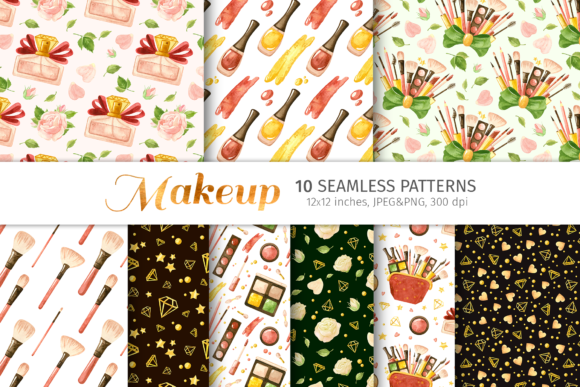
Let's break down the name. "Makeup" refers to the subject matter: icons, shapes, and motifs derived from the world of cosmetics. You'll find representations of lipsticks, blush brushes, powder compacts, mascara tubes, eyeshadow palettes, and delicate abstract shapes reminiscent of beauty aesthetics. "Watercolor" defines the artistic style. These elements are rendered with the characteristic soft edges, gentle gradients, and translucent washes of watercolor painting, avoiding hard digital lines. The magic word is "Seamless". This means the pattern tile is engineered so that when duplicated and placed side-by-side or stacked, the edges match perfectly, creating a continuous, uninterrupted design across any surface area without visible joins.
Imagine a digital tile featuring watercolor-style lipsticks and hearts. When this tile is repeated, the top edge aligns perfectly with the bottom edge of the next tile, and the left edge with the right, forming a limitless background, wrapping paper, or fabric print. This seamless quality is the technical cornerstone that transforms a beautiful illustration into a functional design asset.
The Core Characteristics That Define Them
Several key qualities make Makeup Watercolor Seamless Patterns stand out.
- Organic Texture: The watercolor technique introduces a hand-made, artistic feel. This softness contrasts beautifully with crisp UI elements or hard text, providing visual warmth.
- Theme Consistency: Every element within the pattern supports the beauty theme. This thematic cohesion makes them instantly recognizable and appropriate for targeted projects.
- Color Palette Trends: These patterns often utilize trending color palettes—pastel pinks and peaches, bold neon accents, or sophisticated muted tones—reflecting current trends in both design and cosmetics.
- Scalability: Being vector-based or high-resolution raster files, they can be scaled up or down without loss of quality, suitable for a phone screen or a large banner.
- Layer-Friendly: The translucent nature of the watercolor style allows patterns to be layered over other colors or textures without completely obscuring the underlying layer, enabling complex design mixes.
Where These Patterns Fit in Modern Creative Workflows
The application of Makeup Watercolor Seamless Patterns is surprisingly broad, extending far beyond just "beauty brands." Their blend of aesthetic appeal and technical function makes them a go-to resource in several contexts.
In digital and graphic design, they serve as captivating website backgrounds, especially for blogs, e-commerce shops, or landing pages related to beauty, fashion, lifestyle, and wellness. They frame content without overwhelming it. Social media creatives thrive on them; these patterns make perfect backdrops for Instagram posts, Pinterest graphics, or Facebook ad banners, offering a quick route to a styled, professional look. Email newsletter headers and in-app graphics also benefit from this injected creativity.
Moving to print and product design, the seamless property is crucial. They are ideal for wrapping paper, gift bags, and stationery lines—think notebooks, greeting cards, or wedding invitations with a feminine, artistic touch. In textile design, they can be applied to fabric for apparel, like scarves or blouses, or home decor items such as cushions and bedding. Their repeatability is essential here. Even physical product packaging for cosmetics or related accessories can use scaled-down versions of the pattern as a decorative border or full-wrap design.
For content creators and marketers, these patterns are a time-saving visual asset. A YouTuber focusing on makeup tutorials can use them in video overlays or end screens. A lifestyle blogger can incorporate them into downloadable planners or presentation templates. They provide a consistent visual theme that reinforces brand identity across multiple touchpoints.
Practical Benefits and Considerations for Users
Why choose a Makeup Watercolor Seamless Pattern over a generic geometric pattern or a photograph? The benefits are both practical and psychological.
Firstly, they offer instant thematic alignment. Using these patterns signals your content's niche immediately, communicating "beauty," "femininity," "creativity," or "lifestyle" to your audience before they read a single word. Secondly, they provide artistic credibility. The watercolor style suggests craft and artistry, elevating a design from looking templated to looking custom-curated. Thirdly, they are incredibly versatile within their niche. A single pattern file can be adapted for dozens of uses across a campaign, ensuring visual coherence.
However, some considerations are important. The color dominance of a pattern can affect readability. Placing dense, dark text over a busy pattern might require adjusting the pattern's opacity or using a solid color panel for text. Always test for legibility. Also, consider cultural and audience resonance. While widely appealing, the very feminine and specific theme might not suit every project or brand voice. It's about matching the pattern's inherent mood to your communication goal.
Choosing the Right Pattern for Your Project
Not all Makeup Watercolor Seamless Patterns are alike. When selecting one, think through these factors.
- Scale and Detail: Patterns with large, prominent motifs (like big brushes) are great for bold statements on large formats. Patterns with tiny, scattered elements (like small droplets or stars) work better as subtle textures behind text or for smaller products like business cards.
- Color Harmony: Does the pattern's palette complement your existing brand colors? Can you easily adjust its hues using software like Adobe Photoshop or Illustrator to achieve harmony? Some patterns come in multiple color versions.
- File Format and Usability: Ensure you get the file in a format you can use. Vector formats (.AI, .EPS, .SVG) offer maximum flexibility for scaling and editing. High-resolution PNGs with transparent backgrounds are also highly practical for digital use. Check the licensing terms—some are for personal use only, while others come with commercial licenses.
- Emotional Tone: Observe the feeling a pattern conveys. Some are playful and bright, perfect for a young audience. Others are sophisticated and muted, suitable for luxury or minimalist branding. Align the pattern's emotion with your project's tone.
A common scenario: a startup beauty brand needs a visual identity for its website and product labels. They might choose a Makeup Watercolor Seamless Pattern with soft peach tones and abstract, ethereal shapes to convey gentle, natural beauty. They use it as a full-width banner background on their homepage, scaled down as a border on their product packaging, and as a textured overlay in their social media posts. This creates a unified, memorable, and aesthetically pleasing brand experience.
The Evolution and Future of These Design Assets
The creation of these patterns has evolved. Initially, many were hand-painted with actual watercolors, scanned, and digitally manipulated to become seamless. Today, many are created digitally from scratch using advanced brushes and effects in software that mimic watercolor behavior perfectly, offering even more control over consistency and color. This digital-native approach also allows for easier generation of variations.
Looking forward, we can expect Makeup Watercolor Seamless Patterns to integrate with emerging technologies. They could become part of augmented reality filters for beauty apps, dynamic backgrounds in interactive web design, or even textures in 3D virtual environments for beauty product visualization. Their core appeal—the marriage of a beloved artistic style with a universally recognized theme—ensures they will remain a staple in the designer's toolkit, continually adapting to new platforms and purposes.
Ultimately, these patterns are more than just decorative backdrops. They are flexible, thematic, and emotionally resonant tools that help designers and content creators communicate quickly, beautify effectively, and build cohesive visual narratives across the ever-expanding digital and physical landscape.