Circle Patterns: The Geometry That Shapes Design, Nature, and Technology
Few visual motifs carry the same universal weight as circle patterns. You encounter them everywhere—tiled bathroom floors, stained glass windows, the spiraling seeds of a sunflower, even the loading animation on your phone. What makes circular repetition so appealing is partly biological and partly mathematical. Our brains are wired to recognize symmetry, and circles represent an unbroken, egalitarian form. There is no beginning, no sharp edge to navigate around. When circles repeat, interlock, or radiate, they create rhythms that feel simultaneously ancient and futuristic.
Designers, engineers, and artists have leveraged circle patterns for centuries because these arrangements convey harmony without being predictable. Unlike rigid grids built solely from straight lines, circular motifs introduce movement. They pull the eye around a composition, making them especially useful in branding, user interface design, and architectural detailing. Understanding how circle-based geometry functions can sharpen your creative instincts whether you work in digital media, textiles, product development, or landscape architecture.
The Structural Logic Behind Circular Repetition
At first glance, a circle pattern might seem simple: just repeat a curved shape. The reality is more nuanced. True circular repetition relies on mathematical principles like radial symmetry, concentric spacing, and tangency. When circles are arranged in a grid-like fashion, they can create negative spaces that form pointed stars or petal-like shapes—what designers often call interstitial forms. These unintended shapes are frequently where the real visual magic happens.
There are several fundamental ways to organize circle patterns. Concentric arrangements place circles within circles, all sharing a single center point. This creates a hypnotic, target-like effect that naturally draws the eye inward. Overlapping configurations produce Venn-style intersections, useful for visualizing relationships or creating translucent layered effects in digital art. Packed circle arrangements—where circles sit tangent to one another without overlap—mimic efficient natural systems like honeycomb cells or the close-packing of bubbles on a water surface.
Understanding these structural categories helps when you need to select a pattern for a specific function. A concentric layout feels meditative and stable, making it ideal for wellness brand identities or meditation app interfaces. Overlapping circles suggest connection and collaboration, lending themselves to community platforms or social impact campaigns. Packed circles convey efficiency and organic growth, which is why tech companies often use them in data visualization dashboards.
Where Circle Patterns Appear in the Natural World
Nature didn't wait for human designers to invent circle patterns. The natural environment provides a masterclass in circular geometry. Consider the radial symmetry of a blooming dahlia, where hundreds of tiny florets arrange themselves in interlocking spirals that follow Fibonacci sequences. Each individual flower head forms a miniature circle within a larger circular framework. This hierarchical circular organization repeats in pinecones, cacti, and the fruitlets of a pineapple.
Mushroom fairy rings offer another compelling example. As fungal mycelium grows outward from a central point, it depletes the soil of nutrients directly beneath it, causing new growth to emerge only at the expanding edge. Over time, the mushrooms form a near-perfect circle, sometimes spanning dozens of feet. Wind erosion in deserts carves circular depressions into rock, and ripples on still water radiate outward in concentric rings when disturbed by a single droplet. These phenomena reveal that circle patterns are not merely decorative—they are physical signatures of how energy propagates and how growth optimizes for space.
For designers practicing biomimicry, studying natural circle formations unlocks sustainable solutions. The spiral arrangement of sunflower seeds, for example, has inspired the layout of solar panel arrays to maximize sun exposure throughout the day. Architects have modeled building ventilation systems on the circular chambers of termite mounds, improving airflow while reducing energy consumption. When you borrow structural logic from nature's circular vocabulary, you often land on solutions that are both beautiful and efficient.
Digital Design and User Experience Applications
In the realm of screens and interfaces, circle patterns serve functional roles that go well beyond decoration. Circular avatars are now standard across social media platforms because they focus attention on faces while signaling interactivity. Loading spinners—those rotating circle patterns that appear while an app fetches data—communicate ongoing process without requiring the user to decipher text. The circle implies continuity and patience, reducing perceived wait times compared to static indicators.
Dashboard designers frequently turn to circular data visualizations when they need to communicate proportions at a glance. Donut charts, radial bar charts, and sunburst diagrams all rely on circular pattern logic to layer information without overwhelming the viewer. The human eye processes angular differences along a circle's circumference faster than it parses raw numbers in a table. This makes circular infographics especially effective for executive summaries, fitness tracking apps, and budget breakdown tools.
When implementing circle patterns in a digital product, consistency is paramount. A design system that uses perfectly rounded buttons should extend that circular language to badges, icons, and illustration styles. Inconsistent corner radii create subtle friction that undermines perceived polish. Many modern UI frameworks include tokenized border-radius values specifically to ensure that circular elements feel part of the same family, whether they appear as a large hero image mask or a tiny status indicator dot.
Circle Patterns in Architecture and Interior Spaces
Walking through a building that thoughtfully incorporates circular geometry feels fundamentally different from traversing one built entirely from rectangles. Curved walls, circular skylights, and rotunda ceilings soften the acoustic environment and create gentle sightlines that rectangular corridors simply cannot replicate. Architects working in sacred spaces have long understood this. The Pantheon in Rome draws the gaze upward through a series of recessed square coffers arranged around a massive circular oculus. The pattern diminishes in scale as it ascends, exaggerating the perceived height of the dome.
Contemporary interior designers use circle patterns in flooring, wall treatments, and lighting fixtures to define zones within open-plan layouts. A circular rug positioned beneath a round dining table reinforces the gathering function of that area. Acoustic ceiling tiles arranged in overlapping circle patterns absorb sound while turning necessary infrastructure into a sculptural focal point. Even something as simple as circular mirror arrangements in a retail fitting room can enhance the customer experience by making the space feel less confined and more luxurious.
Tile manufacturers have responded to growing demand for curved aesthetics by producing collections that feature interlocking circular motifs. These require precise installation—uneven grout lines immediately disrupt the fluid effect—but the result can transform an ordinary bathroom wall into a statement surface. When selecting tiles with circular relief patterns, it is worth considering how lighting will interact with the raised geometry. Grazing light from a wall sconce emphasizes texture, while diffuse overhead light makes the pattern feel subtler.
The Role of Circle Patterns in Textiles and Fashion
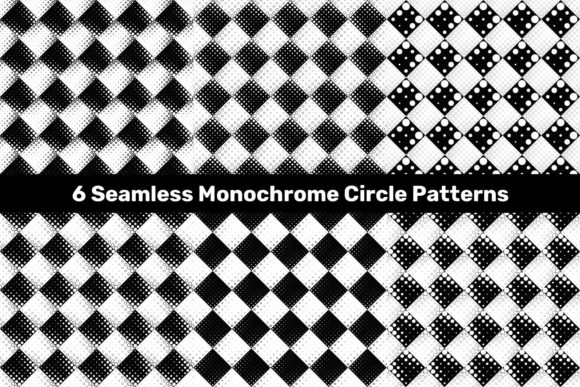
Fabric designers have long embraced circular repetition for its ability to flatter the human form. Polka dots remain one of the most resilient patterns in fashion history precisely because the evenly spaced circles create a rhythm that works at any scale. Small dots on a silk blouse read as sophisticated texture, while oversized circles on a summer dress project bold, playful energy. The key variable is spacing—tightly clustered dots feel energetic and slightly chaotic, while widely spaced arrangements read as more formal and restrained.
Beyond polka dots, circle patterns appear in intricate lacework, knitted fair isle motifs, and embroidered embellishments. Circular shapes in textiles often carry cultural significance. In Japanese design, the seigaiha pattern—layered concentric arcs resembling ocean waves—has been used for centuries on kimonos and ceramics to symbolize peace and good fortune. West African bogolanfini mud cloth frequently features circular motifs representing the sun, community, and the cyclical nature of life.
For fashion brands developing their own prints, the decision to use circular versus geometric angular patterns carries psychological weight. Rounded shapes are generally perceived as friendlier, more approachable, and more feminine in many cultural contexts. Brands targeting children or family audiences often lean heavily into circular pattern language for this reason. A children's clothing line featuring soft overlapping circles will likely perform differently in market testing than one using sharp triangular repeats, even when color palettes are held constant.
Engineering and Structural Benefits of Circular Arrangements
Circles are not just visually pleasing—they possess inherent structural advantages that make circle patterns valuable in engineering contexts. A circular cross-section distributes stress evenly, which is why pipes, tunnels, and pressure vessels default to cylindrical forms. When you arrange multiple circular elements together, such as in a honeycomb core panel, you achieve an exceptional strength-to-weight ratio because the curvilinear walls support each other under compression.
In urban planning, circular roundabouts reduce traffic fatalities by eliminating the high-speed perpendicular collisions common at four-way intersections. The circular pattern of lanes forces drivers to slow down and merge, fundamentally changing behavior without relying solely on signage. This same principle of gentle redirection through circular geometry informs the design of pedestrian plazas, where circular bench arrangements encourage social interaction by creating semi-enclosed gathering pockets within larger open spaces.
Acoustic engineers employ circle patterns when designing concert hall diffusers. Surfaces covered in wells of varying depths, arranged in circular or spiral configurations, scatter sound waves evenly throughout the audience. This prevents the muddiness that occurs when sound reflects uniformly from flat surfaces. The mathematical sequences governing the placement of these wells—often based on prime number theory—demonstrate how circular arrangements can solve complex physical problems that linear grids cannot address as effectively.
Practical Considerations When Working with Circular Motifs
Adopting circle patterns in your own projects requires thinking through several practical concerns. Scale is the most immediate variable. A pattern that looks balanced on a small swatch can become overwhelming when applied to an entire wall or website background. It is wise to test circular repeats at multiple sizes before committing. What reads as an elegant subtle texture at thumbnail size might feel aggressively busy at full scale.
Color contrast also behaves differently in circular arrangements compared to linear ones. Because circles create enclosed focal points, high-contrast color pairings within a circular pattern will draw the eye more forcefully than the same colors in a striped layout. This can be useful for directing attention, but it can also create visual hotspots that disrupt flow if not managed intentionally. Many designers mute one element—either the circle fill or the background—to let the pattern breathe.
When procuring materials that feature circular designs, pay attention to pattern repeat alignment. Poorly matched seams on wallpaper or fabric with large-scale circle patterns immediately signal low quality. The larger the circles, the more waste you can expect during cutting and installation. Factoring this into material estimates prevents budget surprises. For digital products, SVG-based circular patterns scale infinitely without quality loss, making vector formats the preferred delivery method for responsive web design.
Learning to See Circular Systems Everywhere
Once you become attuned to circle patterns, you start noticing them in places most people overlook. The arrangement of cup holders in a car, the layout of dimples on a golf ball, the spiral of an herbal supplement capsule—none of these are accidental. Someone made a conscious decision about spacing, scale, and repetition. Training your eye to deconstruct these everyday encounters builds a mental library you can draw from when solving your own design challenges.
Photography can accelerate this awareness. Spend an afternoon documenting circular arrangements in your environment: manhole covers, bicycle wheels, stacks of ceramic bowls, the rings inside a cut tree trunk. Reviewing these images reveals common patterns. You might observe that circles grouped in odd numbers tend to feel more dynamic than even-numbered groupings, or that the presence of a single off-center circle within an otherwise orderly arrangement creates a productive tension that holds attention longer.
The broader takeaway is that circle patterns represent a fundamental organizing principle, not merely a decorative afterthought. They emerge wherever efficiency, beauty, and structural integrity intersect. Whether you are designing a mobile app icon, planning a public garden, or selecting upholstery fabric, understanding the language of circular geometry gives you access to one of design's most versatile and enduring tools. The circle has no sharp edges to hide, no awkward corners to navigate around—just a quiet, continuous completeness that adapts to nearly any context you place it in.