The Enduring Grace of Line Drawing Floral Patterns: Why the Orchid Captivates Artists and Designers
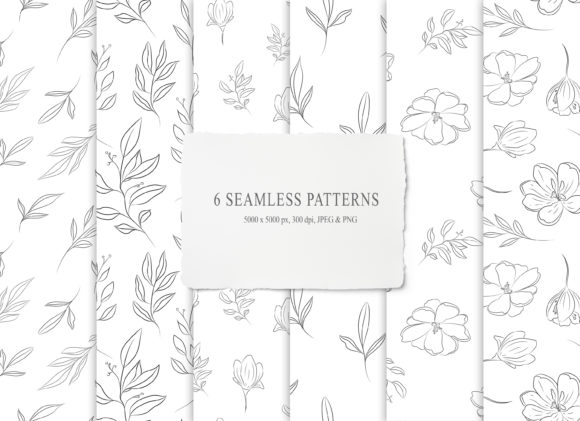
There is a quiet confidence in a single unbroken line. When that line curves, dips, and travels with intention across a blank surface, it can transform into something that breathes life into a brand, a textile, or a piece of personal art. Among the vast catalog of botanical muses available to an illustrator, few hold the same magnetic tension as the orchid. The pursuit of perfecting line drawing floral patterns, particularly those centered on the orchid, sits at a fascinating intersection of scientific observation and raw emotional expression.
Unlike fuller, more chaotic blooms, the orchid possesses an architectural clarity. Its structure almost demands to be deconstructed into clean vectors and ink strokes. This isn’t simply a trend dictated by the minimalist movement sweeping through graphic design. It is a deeper recognition that the orchid’s strength lies in its silhouette, its negative space, and the dramatic reach of its petals. For the modern creative, understanding how to navigate the delicate balance between complex botany and pure linear simplicity unlocks a toolkit far richer than simple decoration. It becomes a study in restraint, precision, and the organic imperfections that make a hand-drawn piece feel irreplaceably human.
The Structural Anatomy That Defines a Line
To master line drawing floral patterns of the orchid, one must first unlearn the generic flower shape. A daisy is radial; a rose is a tight spiral of chaos. The orchid, however, is bilateral. It has a left side and a right side, a defined vertical axis, and an extravagant lip—often the focal point for pollinators and artists alike. This structural rigidity is a gift to the sketch artist. It provides a mathematical skeleton to hang organic movement upon.
When we talk about capturing an orchid in a linear medium, we are talking about tension. The sepals, often overlooked in favor of the flashier petals, create a strong, protective backdrop. In a line drawing, these can be represented with a slightly thicker weight or a dashed, textural stroke to suggest sturdiness. The lip, or labellum, is where the personality resides. It curves, it twists, and it often features delicate fringing. Translating this not with shading, but with the sheer pressure and taper of a single brushstroke, is a discipline that has captivated artists from the age of botanical illustration to the modern iPad Pro.
A practical exercise for those exploring Line Drawing Floral Patterns. Orchid. study is to start not with the outline, but with the vascular lines. Trace the invisible threads of water and nutrient flow from the stem, through the pedicel, and into the veins of the petals. These inner architecture lines naturally guide the eye and provide a subtle, secondary layer of detail. When you draw the external contour later, the flower doesn’t just look like an icon; it registers as a living piece of geometry.
Translating Organic Forms into Graphic Rhythm
The magic of a successful floral line pattern does not solely rest on a single botanical portrait. It lives in repetition, spacing, and rhythm. A pattern featuring the orchid can easily drift into feeling stiff or overly formal if the negative spaces aren’t breathing correctly. The long, elegant spike of a moth orchid (Phalaenopsis) or the cascading chain of a Dendrobium creates distinct directional energy. This energy must be harnessed to guide the viewer’s eye across the surface, whether that surface is a silk scarf or a website header.
Consider the difference between a scattered, all-over pattern and a directional "toss" layout. Scattering elements such as stylized orchid heads, trailing roots, and abstract buds creates a vintage, bohemian density. However, keeping the stems attached and flowing in a unified, sweeping motion produces a far more modern and sleek result. Designers frequently experiment with continuous line drawing here—a method where the pen never leaves the paper. The result is a tangled yet coherent flow that mimics the way light physically moves across a glossy petal. In the context of Line Drawing Floral Patterns. Orchid. experimentation, this continuous technique forces the artist to find the shortest aesthetic distance between two points, often leading to surprisingly elegant abstractions.
The thickness of the line also dictates the mood. A monoline weight—mechanical and consistent—reads as clean, logical, and perfectly suited for die-cut stationery or minimalist tech accessories. Variable weight, achieved through a brush pen or a pressure-sensitive stylus, injects a narrative of shadow and growth. It feels artisanal. In a world saturated with AI-generated vector blobs, the slight wobble of a hand-drawn line conveys trust and craftsmanship, signaling that a product was conceived with care rather than algorithmically generated.
The Emotional Weight of the Monochrome Bloom
Removing color from an orchid is a radical act. In nature, these flowers are symphonies of spotting, gradient, and iridescence designed to seduce insects. Stripping them down to black ink on white paper reduces them to their essence. This absence of color forces the viewer to confront form. It elevates the plant from mere decoration to symbol. An ink-drawn Cattleya is no longer just a pink flower; it becomes a symbol of luxury and strange beauty. This is why high-end brands gravitate toward skeletal floral patterns—they communicate complexity without the visual noise of color differentiation.
For those of us integrating these patterns into digital products or physical goods, the emotional tonality is critical. A tight, geometric, unbroken orchid line pattern feels clinical and futuristic, suitable for tech branding or architectural interiors. A loose, sketchy, multi-stroke iteration—where the searching lines of the artist remain visible—feels intimate, soft, and deeply therapeutic. It sells mindfulness journals and organic skincare differently than a rigid vector would. This psychological layering is what makes Line Drawing Floral Patterns. Orchid. assets so eternally marketable on creative platforms.
Orchid Lines in Physical and Digital Craft
We are living in a maker culture that physically craves the tactile authenticity of line art. The resurgence of linocut printing, screen printing, and pyrography (wood burning) has placed a spotlight on linear designs. There is a practical reason for this: they transfer beautifully. The orchid, with its naturally distinct segments, separates colors cleanly in a multi-block print, but as a pure line drawing, it works magic in single-layer processes. The clean skin of a ceramic vase needs nothing more than a single, fluid orchid stem etched into the glaze to feel complete.
On the software side, tools like Adobe Fresco and Procreate have introduced "live brushes" that mimic the bleed of ink into paper. This hybrid ground allows a designer to create Line Drawing Floral Patterns. Orchid. vectors that retain the DNA of manual ink work. The process usually starts with a pencil sketch of the orchid’s trigger mechanism and column, that intricate centerpiece where the flower’s reproductive magic lies. Once the sketch is refined, the cleanup process isn't about perfection; it is about deciding which imperfections to keep. A slight offset in a petal’s symmetry, or a tiny skip in the ink, is often the difference between corporate stock imagery and a signature artistic asset.
Many laser-engraving services and CNC routers specifically request pure vector line art. The orchid is perfectly suited for this due to its long, sweeping contours that translate beautifully into toolpaths. When designing for such manufacturing, it's vital to ensure that lines do not collapse into a tangled mess at scale. Creating a breathable density—where the orchid’s roots and stems create a filigree of air rather than a solid block of black—ensures that the final physical product feels delicate, even when carved out of heavy walnut or acrylic.
Selecting the Right Orchid Specimen for the Desired Narrative
Not all orchids speak the same language. The choice of subject within the orchid family drastically alters the visual story.
- Phalaenopsis (Moth Orchid): The broad, flat petals provide massive surfaces for internal linework. Their circular arrangement anchors a composition. Ideal for beginners practicing line confidence.
- Paphiopedilum (Slipper Orchid): Defined by its pouch-like lip and twisted sepal placement. It introduces a wonderful geometric clunkiness. The heavy, graphic nature of its lip demands a bold stroke.
- Oncidium (Dancing Lady): These sprays of tiny, intricate flowers create a spectacular "dotted" line effect when done in mass. They fill pattern space with a texture that waves without becoming heavy.
- Vanda: The unruly, aerial roots and lattice-like petals call for a wild, fast-paced drawing style. It is the perfect muse for expressive ink flicking.
Choosing the specimen based on the project’s energy allows for a deep well of variation without ever leaving the orchid family. A logo might rest on a single, authoritative Cymbidium, while a repeating wallpaper roll relies on the airy gossip of a hundred Oncidium sprigs. The line drawing floral patterns orchid designers create are thus not a one-size-fits-all solution; they are a family of nuanced solutions.
Navigating the Current Visual Economy
In the current landscape, where a photo-realistic rendering is often a dime a dozen, the drawn line signals intention. The market for digital paper goods, wedding suites, and brand identity systems is increasingly rewarding the "unplugged" aesthetic. However, the application of an orchid line drawing must bypass cliché. The outline of a Phalaenopsis against a white background has been executed millions of times. The stand-out pattern introduces a context. It pairs the botanical line with surprising geometric grids, or it overlaps the petals in a way that creates a chimeral, almost abstracted being that only reveals itself as a flower upon a second glance.
The proliferation of drawing tutorials has flattened the learning curve somewhat, but the gap between a traced photo and an interpreted essence is vast. Those searching for Line Drawing Floral Patterns. Orchid. often fall into two camps: the downloaders seeking ready-made design assets and the aspirants seeking to create them. The highest value sits in the latter. A designer who can craft a custom orchid pattern tailored to the contour of a specific product—say, a skateboard deck or a contour-cut vinyl sticker—holds a lucrative trade secret. The long, linear curves of the orchid are naturally ergonomic, fitting perfectly around the constraints of irregular shapes where a blocky pattern would fail.
It is also critical to consider the file's end-life. Will this line art be cut in vinyl? If so, stencil bridges must be consciously designed into the petals, keeping the inner floating elements attached to the main body. Will it be embroidered? Stitch direction, technically called tatami paths, will follow the line direction, meaning the sweeping lines of the orchids will literally be rows of thread, adding a three-dimensional texture that aligns physically with the illusion of form. Thinking practically about these manufacturing realities elevates a simple sketch into a professional, production-ready asset.
Mastering the art of the orchid in line form is essentially a lesson in editing. It’s about understanding how little information the brain needs to complete the picture. By focusing on the junction where the lip meets the column, or the precise point where a bud swells before opening, the artist communicates fertility and latent energy. It’s a visual whisper that lingers longer than a shout. For brands and craftspeople alike, that whispered elegance, embodied in a simple ink stem, remains one of the most potent signifiers of refined taste available to us today.